

-
-
-
-
Technical Services
-
Video picture

22
2026
-
07
The market demand for homogeneous self-insulating masonry blocks is strong, and equipment manufacturers are seeking Guangzhou Hengde.
Self‑insulating masonry blocks meet the current demands of energy‑efficient building development and boast broad market potential. Many regions across China have introduced supportive policies to vigorously promote their adoption. Hengde, a specialized manufacturer of self‑insulating block equipment, has upgraded its eighth‑generation servo‑controlled block cutting machine, offering standardized dimensions, consistent output, and superior quality.
I. Policy Impetus and Industry Standard Upgrades
Implementation of Mandatory Building Energy Efficiency Standards
By 2025, more than 95% of newly constructed buildings will be required to adopt envelope‑level thermal insulation systems. Homogeneous self‑insulating masonry units, which meet the integrated requirements of structural and thermal performance, have emerged as the preferred alternative to conventional external insulation materials.
Carbon‑reduction policies are driving technological innovation.
Guangzhou Hengde’s non‑autoclaved CLC technology reduces energy consumption by 40% and carbon emissions by 45%, aligning with the national “dual carbon” goals’ stringent requirements for the building materials sector and steering the market toward low‑carbon technologies.
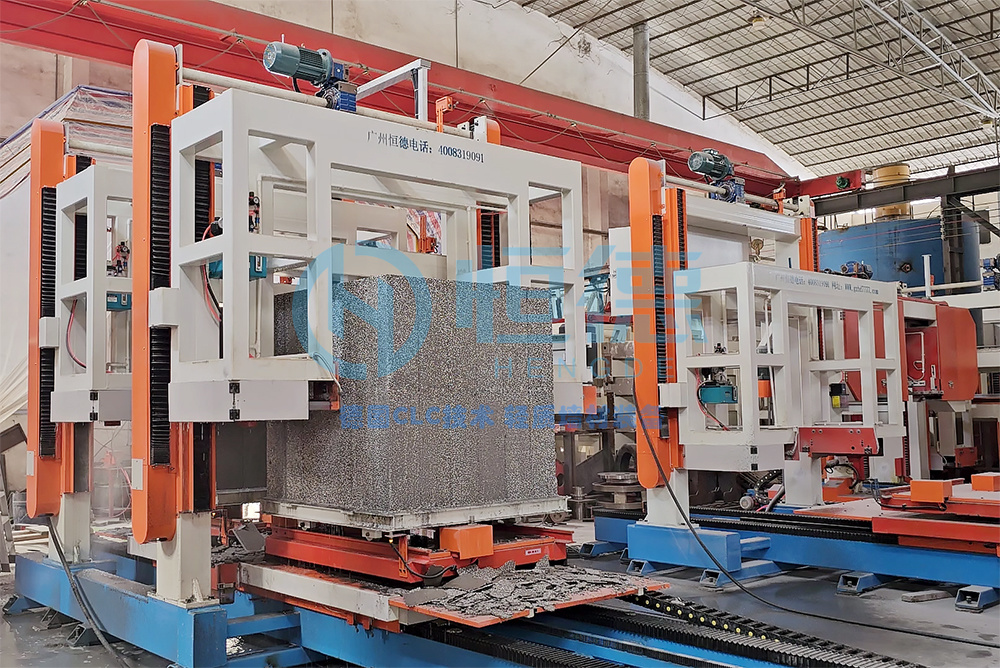
II. Product Performance and Construction Efficiency Advantages
Outstanding overall performance
Homogeneous self‑insulating masonry blocks combine lightweight properties (bulk density ≤ 600 kg/m³), high strength (≥ 3.5 MPa), fire resistance (Class A), and thermal insulation (thermal conductivity ≤ 0.09 W/(m·K)), meeting the 75% building energy‑saving standard and reducing overall building energy consumption by more than 30%.
Construction period shortened
The product eliminates the need for an additional insulation layer, streamlining the installation process and reducing construction time by 30%. It addresses common issues with conventional external insulation systems, such as cracking and detachment, while lowering developers’ overall costs by 15%–20%.
III. Analysis of Growth Drivers in Market Demand
Urbanization and Urban Renewal Demand
By 2025, China’s urbanization rate will exceed 70%, and the annual renovation of older residential neighborhoods is expected to unlock a building‑energy‑efficiency market of more than 1 billion square meters. Self‑insulating masonry units are well suited to the rapid construction scenarios of prefabricated buildings.
Regional Policy Dividends
Building energy‑efficiency standards are being raised in countries along the Belt and Road, while branch plants in border regions such as Xinjiang are expanding their reach into the Central Asian market, driving a 25% annual increase in equipment exports.
Accelerated substitution of environmentally friendly materials
The product can effectively utilize solid wastes such as fly ash and construction debris (with a utilization rate of ≥95%), aligns with local “Zero-Waste City” initiatives, and is eligible for priority procurement under government green‑building material programs.
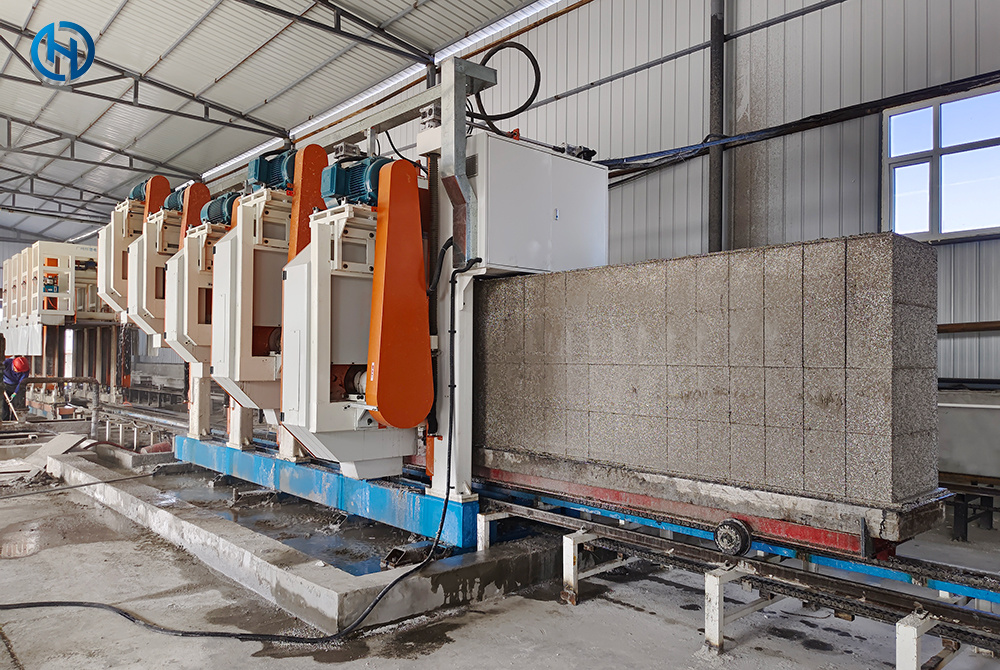
IV. Competitive Landscape and Technological Barriers
Leading enterprises drive innovation.
Guangzhou Hengde leverages proprietary industry patents—Germany’s LUCA foaming technology and the UK’s CDS curing process—to establish robust technological barriers. With a production‑ready equipment rollout timeframe of just 30–45 days, it boosts returns for small and medium investors to 20%–30%.
Differentiated product portfolio
Hengde’s single‑line lightweight wall‑material production line is compatible with a wide range of products, including EPS self‑insulating blocks, ceramsite composite blocks, and prefabricated partition panels, meeting developers’ customized requirements and achieving a market share exceeding 35%.
The market for homogeneous self-insulating masonry blocks is experiencing parallel growth driven by robust policy support, rapid technological advancement, and growing environmental imperatives. By 2025, the market size is projected to exceed RMB 80 billion, with a compound annual growth rate of 18%.
Self-insulating masonry block,Self-insulating block equipment,Self-insulating block production line
Previous Page
No.25, Fulian Road, Fu'an Industrial Zone, Foshan City
No. 7, Jianyi Road, Xinjiang Wujiaqu Industrial Zone, Bingtuan New Building Materials Industrial Park
12 Potsdam Avenue, Berlin, Germany
WeChat Public Number
TikTok
Copyright©2014-2025 Guangzhou Hengde building materials Co. Ltd.