

-
-
-
-
Technical Services
-
Video picture

15
2018
-
11
Main characteristics and application scope of foam concrete
Foamed concrete is also called lightweight concrete, or cement foamed concrete. Because it is a new material, there is no industry and national standard for the time being, so the name has not been unified.
Main features of 1. foam concrete:
1, good insulation performance, energy saving
The thermal conductivity of foam concrete is 40 ~ 60% lower than that of aerated concrete, 70% lower than that of ceramsite concrete, and 40 ~ 60% lower than that of expanded perlite.
2. Light weight, high strength, reduce building load
The dry volume bulk density of foam concrete is generally 180~300kg/m3 (with load-bearing requirements up to 1200kg/m3), which is equivalent to about 1/10~1/3 of clay brick, and is also lower than that of ordinary lightweight aggregate concrete. Compared with aerated concrete and ceramsite concrete, the strength of foam concrete is 2~3 times higher than that of expanded perlite.
3, simplify the construction process, shorten the construction period, long service life
Foam concrete is applied in the roof system by on-site pouring. The slope finding layer, leveling layer, thermal insulation layer, waterproof layer (optional, made into waterproof foam concrete) and protective layer are completed at one time (integrated), thus simplifying the roof construction process and saving more than 50% of the construction period compared with the construction period required for general roof construction. Its raw materials are mainly cement, sand and gravel, etc., which have the same physical properties as the building structure layer, and form a whole with the concrete roof, so the service life is long, and the service life of cement concrete is the same.
4. Good water resistance
Cast-in-place foam concrete has small water absorption, relatively independent closed bubbles and good integrity, so that it has a certain waterproof performance. Waterproofing agent can also be added to make it into waterproof foam concrete. TH foam concrete is 50% lower than aerated concrete and 60% lower than ceramsite concrete
5. Low elastic shock absorption, good shock resistance
The porous nature of foam concrete makes it have a low elastic modulus, so that it has a good absorption and dispersion effect on the impact load; in addition, the smaller the load of the foundation, the stronger the seismic resistance, therefore, the use of foam concrete The seismic performance of the building will increase.
6. Excellent sound insulation and fire resistance
Foam concrete contains a large number of independent bubbles, and the distribution is uniform, the sound absorption capacity of 0.09~0.19, is 5 times that of ordinary concrete, with effective sound insulation function. Do not burn, the fire resistance limit is greater than three hours, and the fire resistance of other insulation materials is beyond reach.
7. Integrality
Foam concrete can be cast on site construction, combined with the main structure layer closely, in the use of the roof can not leave the separation seam and vent pipe.
8. Environmental Protection
The main raw materials required for foam concrete are cement and foaming agent. The foaming agent is neutral and does not contain harmful substances such as benzene and formaldehyde, which avoids environmental pollution and fire hazards.
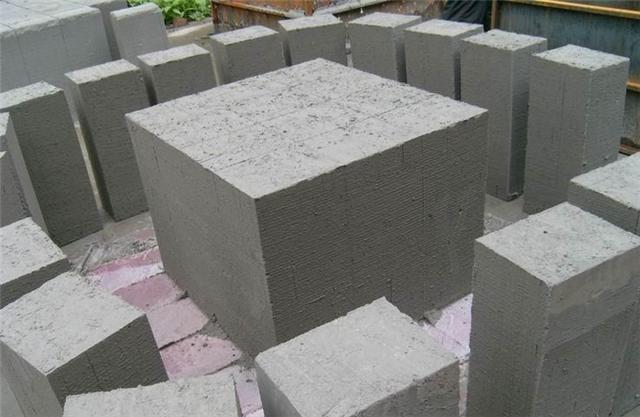
Scope of application of 2. foam concrete
Foamed concrete is also called lightweight concrete, or cement foamed concrete. Because it is a new material, there is no industry and national standard for the time being, so the name has not been unified.
The material is suitable for building roof slope finding and heat preservation. Ground heating and heat insulation; Wall insulation layer, foam concrete block; Used as heat insulation filling wall in frame structure or composite wall panel made of thin steel plate; Compensation for filling layer of foundation, road, bridge, tunnel and large structures; Retaining wall of highway slope protection, subgrade, river bank and port; Made of light rockery, bonsai, wood-like materials and other garden products; furnace cast-in-place insulation layer, spraying insulation layer, refractory insulation brick and other refractory applications; lightweight foam ceramic products and so on. The filling of buildings (including the filling between the roof and beams of the basement, the adjustment filling when the basement structure is not unified, and the filling of equipment foundation pit), the cushion layer of the floor insulation layer (floor heating), etc.
Foam concrete
No.25, Fulian Road, Fu'an Industrial Zone, Foshan City
No. 7, Jianyi Road, Xinjiang Wujiaqu Industrial Zone, Bingtuan New Building Materials Industrial Park
12 Potsdam Avenue, Berlin, Germany
WeChat Public Number
TikTok
Copyright©2014-2025 Guangzhou Hengde building materials Co. Ltd.