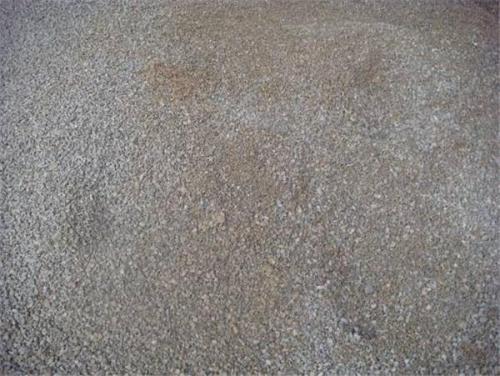
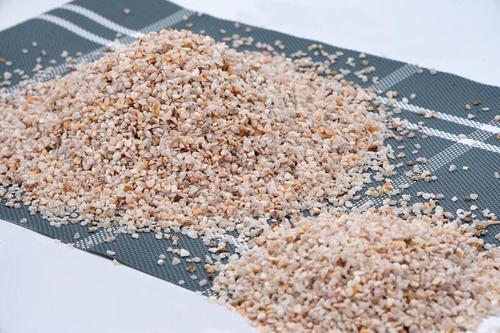
The main technical indicators of sand particle size of 0.16mm ~ 4.75mm aggregate called fine aggregate, referred to as sand. Concrete sand is divided into natural sand and artificial broken sand. Natural sand is the main sand used in construction projects. It is a granular material formed by rock weathering. It is divided into river sand, mountain sand and sea sand according to different sources. Mountain sand has rough surface, many edges and corners, and more silt content and organic matter content. The surface of river sand is smooth, clean and widely distributed, which is the main sand for concrete. Artificial broken sand is broken by natural rock, its surface is rough, more edges and corners, more clean, but the sand contains more flaky particles and fine sand. Due to the depletion of natural sand resources, artificial sand has been widely used in China.
Clay, silt, stone chips and other powdery substances with particle size less than 0.075mm are collectively referred to as mud. Massive clay and silt are collectively referred to as mud or clay blocks. Mud is often wrapped in the surface of sand, which will greatly reduce the interface between sand and cement bonding force, so that the strength of concrete is reduced, while the specific surface area of mud is large, the content will reduce the fluidity of concrete mixture, or increase the mixing water and cement dosage, as well as the dry shrinkage and creep of concrete, and reduce the durability of concrete. The influence of mud block on the properties of concrete is basically the same as that of mud, but the harm is greater.
Effect of sand containing mud on concrete performance
Effect of Mud Content on Strength of (I) Sand
The existence of mud makes the aggregate interface because of the lack of hydration capacity, neither like cement and aggregate combined with each other to produce strength; nor like sand and gravel in the concrete to play a skeleton role, only equivalent to the introduction of a certain number of voids and defects in the cement stone, increased the porosity of the cement stone, and most of these holes in the tens to hundreds of microns in the range, or even larger, seriously affecting the strength of the cement stone; the mud component greatly increases the water consumption of concrete, improves the actual water consumption of concrete, reduces the effective dosage of admixture, and leads to the reduction of the strength of cement stone.
Influence of (II) Sand Mud on the Mixture
When the silt content in sand is high, because the silt content is actually clay fine powder, which has the same water absorption performance as the cementitious material, and the water absorption problem of these powders is not considered in the mix ratio design, so these clays need the same proportion of water to achieve surface wetting, and the wetted clay material also needs the same proportion of additives to achieve the same fluidity. This is under the condition of the same ratio, when the admixture and water consumption are unchanged, the mud content is increased from 2% to more than 5%, resulting in the actual dosage of admixture in cementitious materials is less than the recommend dosage, the initial fluidity of concrete becomes poor, and the slump loss becomes larger over time. In order to achieve the same workability of concrete mixture, the dosage of admixture increases.
Effect of (III) Sand Mud Content on Sand Ratio
When the silt content in the sand is high, because the silt content is actually clay fine powder, which has the same water absorption performance as the cementitious material, the quantity of these powders is not considered in the mix ratio design, and the weighing process of the sand does not consider the quantity of these powders, so the actual sand dosage in the production process is less than the calculated dosage of the mix ratio design, the actual sand rate of concrete mixture is less than the calculated sand rate, which is the same ratio of the conditions, the increase of mud content leads to the actual sand rate of concrete to reduce, so that the concrete slurry in the stone package is poor, resulting in the initial fluidity of concrete mixture is poor, the collapse of the time loss becomes larger.