

-
-
-
-
Technical Services
-
Video picture
14
2020
-
04
Strengthening the Comprehensive Utilization of Construction Waste to Relieve the Tension of Sand and Stone Supply
Guangzhou Hengde new wall material environmental protection brick production equipment can handle a variety of industrial waste tailings and construction waste resources
Construction waste is all kinds of waste such as soil and materials produced in the process of new construction, reconstruction, expansion and demolition of all kinds of buildings, structures, municipal pipe networks and residents' decoration and decoration of houses. According to the source, construction waste can be divided into engineering muck, engineering mud, engineering waste, demolition waste, decoration waste 5 categories. The main components of construction waste include: waste concrete, waste masonry, waste mortar, muck and other inorganic non-metallic materials; waste steel and other metal materials; waste wood, waste plastics and other organic materials and other waste materials.
According to the statistics of 35 pilot cities (districts) of construction waste treatment, the production of construction waste in 2018 and 2019 is 1.31 billion tons and 1.37 billion tons respectively, and the total amount of construction waste in China is not less than 3.5 billion tons/year.
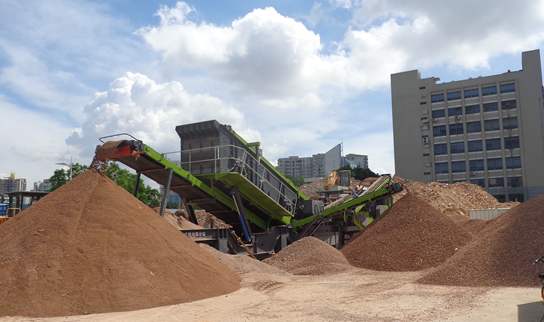
At present, the object of construction waste recycling is waste concrete, brick and stone-based inorganic non-metallic materials, mainly from demolition, construction waste. In the total amount of construction waste, demolition waste accounts for about 20%, and if engineering waste and decoration waste are added, it can account for about 30%.
Waste concrete and waste masonry in demolition construction waste are the main sources of recycled aggregates. At present, the amount of demolition waste used to produce recycled products such as aggregates and profiles in my country's construction waste accounts for about 8% of the total construction waste. Compared with foreign countries, recycled aggregates in Britain and other countries have accounted for 20% of all building aggregates. Belgium has proposed that by 2050, all natural aggregates will be replaced by recycled aggregates. As long as we adhere to the direction of construction waste recycling, the proportion of recycled aggregate in construction aggregate will gradually increase. At a certain historical stage, construction waste will certainly become the main source of construction aggregate.
Recycled aggregate of construction waste can be used in different fields instead of natural aggregate as engineering construction materials, such as recycled concrete, mortar, block, brick, plate and so on. Recycled pervious concrete, permeable brick, inorganic mixture, graded crushed stone, backfill material, etc. are applied to municipal traffic engineering. Recycled aggregate is used as seepage storage material in sponge city construction. Recycled concrete products are used in underground pipe corridors, etc. The application project reaches tens of millions of square meters, the time is up to 15 years, and the quality of the project is reliable.
With the gradual deepening of the production and application practice of recycled products, more and more product application technologies are becoming mature. At present, a total of 16 national and industry standards have been issued, and more than 10 industry and group standards are being compiled to provide engineering applications. Technical support. Such as "Recycled Fine Aggregate for Concrete and Mortar" GB/T 25176, "Recycled Coarse Aggregate for Concrete" GB/T 25177, "Technical Specification for Application of Recycled Aggregate" JGJ/T 240, "Construction Waste Recycled Aggregate Solid Brick" JG/T 505, "Construction Waste Recycled Aggregate Inorganic Mixture for Road" JC/T 2281, etc. In addition to national or industry standards, areas with better promotion of construction waste recycling are also actively formulating local standards.
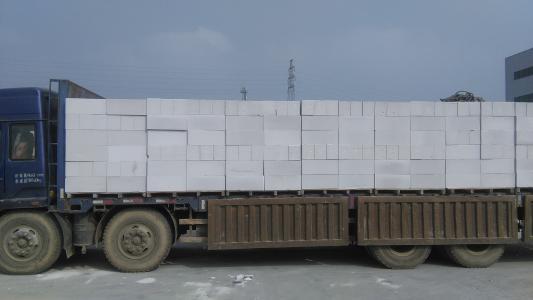
It is understood that Guangzhou Hengde new wall materialsEnvironmental protection brick production equipmentIt can process a variety of industrial waste tailings and construction waste resources to make different products such as light foam bricks, CLC aerated blocks, building blocks, partition boards, insulation boards, etc. The company has the ability to develop industrial solid waste recycling technologies such as fly ash, coal gangue, tailings, sludge, industrial waste residues and construction waste into new environmental protection wall materials with high added value.

Environmental protection brick equipment
No.25, Fulian Road, Fu'an Industrial Zone, Foshan City
No. 7, Jianyi Road, Xinjiang Wujiaqu Industrial Zone, Bingtuan New Building Materials Industrial Park
12 Potsdam Avenue, Berlin, Germany
WeChat Public Number
TikTok
Copyright©2014-2025 Guangzhou Hengde building materials Co. Ltd.