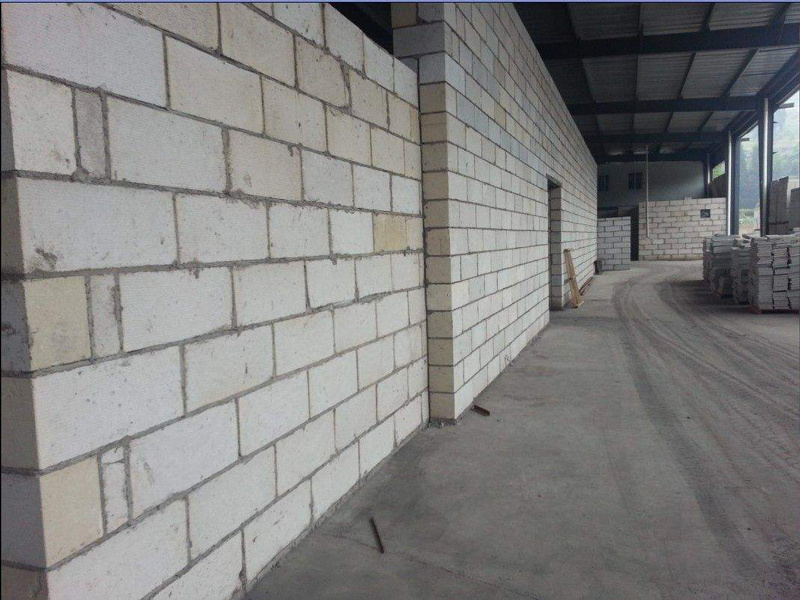
With the introduction of national policies such as "no sticking" and "no solid", various concrete blocks have emerged. According to the source of aggregate used, they are roughly divided into the following three categories:
Natural sand and gravel aggregate: concrete blocks produced with sand and gravel, stone powder and other aggregates occupy the largest share of concrete in China, but with the continuous deterioration of the environment, many cities in China have closed stone factories around the city, resulting in rising stone prices, and it is urgent to find a substitute for natural stone.
Industrial tailings: in areas where mining enterprises are relatively concentrated, there are a large number of enterprises that use mining and tailings to produce concrete blocks, such as iron tailings, titanium tailings, fly ash, slag, phosphorus slag, etc.; but most cities are limited by mine resources and still use natural stone as the main raw material.
Construction waste: China is in the peak period of shantytown transformation and new urbanization construction. The phenomenon of construction waste "besieged city" is shocking. The use of construction waste to produce concrete blocks is an inevitable choice to eliminate environmental impact and save natural resources.
Guangzhou Hengde has invested tens of millions of yuan, introduced advanced equipment and technology from Germany, Britain, Russia and the United States, planned and designed a set of brand-new foam concrete block production equipment for construction waste and industrial waste residue, and comprehensively utilized urban solid waste such as construction waste, soil spoil and sludge generated by demolition, with an annual output of 5-300000 cubic meters for new building materials products.
Category of construction waste recycled concrete block:
Reinforced concrete masonry buttressed retaining wall shows good mechanical performance in the pilot project, meets the application requirements in the actual project, saves 25% of the cost compared with the reinforced concrete retaining wall with the same retaining height, and saves 15% of the cost compared with the rubble retaining wall with the same retaining height.
Reinforced concrete masonry retaining wall is a new type of retaining wall, which can save resources, protect the environment and save cost, and can be popularized and applied in the construction of retaining walls such as highways.
The development trend of recycled concrete blocks-strengthening the source sorting of construction waste The fundamental factor that inhibits the development of the construction waste recycled concrete block industry is that the construction waste sorting technology is not up to standard. The recycled concrete and recycled brick are mixed together, and the broken recycled aggregate The limited scope of application and low added value have severely restricted the development of the construction waste resource utilization industry. The separation of concrete and tiles will provide recycled aggregate with small difference and stable performance for recycled concrete blocks.
Brick and tile recycled aggregate is mainly used to produce lightweight insulation block, non load-bearing wall.
Concrete is mainly used for reinforced masonry and decorative-structural integrated blocks. Reinforced masonry, masonry in the configuration of reinforced concrete masonry structure, is a resource-saving wall form.
(1) Save steel. Under the premise of ensuring mechanical properties, the minimum reinforcement ratio of reinforced masonry structure is much smaller than that of reinforced concrete structure, which can save 30%-50%.
(2) Save wood, reinforced block masonry wall does not need formwork in construction.
(3) Saving time, the construction speed of reinforced block masonry wall is obviously faster than that of reinforced concrete structure.
(4) Save decoration, the block itself has a decorative effect and does not require additional decoration.
(5) Saving land can reduce land acquisition and protect farmland.
Combined with the above five items, compared with reinforced concrete, reinforced construction waste (or industrial waste residue) block wall can save 15%-30% of the cost.
The application field of reinforced block masonry structure is expanded: residential to industrial buildings and public buildings; From construction engineering to highway engineering and railway engineering; From civil engineering to military engineering.