

-
-
-
-
Technical Services
-
Video picture

28
2022
-
03
Comprehensive promotion of the use of green building materials, the development of low-carbon building structure system
In view of the application of green building materials in building insulation, environmental protection and other fields, a number of key projects should be laid out during the 14th five-year Plan period, and a technological innovation system of green building and building materials industry with enterprises as the main body, market-oriented, and deep integration of industry, university and research should be established, and the research and development and achievement transformation of subversive low-carbon technologies and equipment of green building materials should be accelerated.
Carbon peak and carbon neutrality not only involve all aspects of economic and social development, but also are inextricably linked with people's daily life. Taking the "residence" where people live as an example, according to the "China Building Energy Consumption Research Report (2020)", the total terminal carbon emissions of the national construction industry in 2018 was 4.997 billion tons, accounting for 50.6 of the country's total carbon emissions. It can be seen that there is much to be done to achieve the goal of carbon peak and carbon neutrality and to promote energy conservation and carbon reduction in the building sector.
Promote the use of green building materials, the development of low carbon building structure system
A tall building, starting from a brick by a tile. Carbon emissions in the construction sector start from the production of building materials.
In fact, the carbon emissions of building materials should not be underestimated. In 2020, China's main building materials cement production of 2.377 billion tons, carbon dioxide emissions accounted for about 12% of the country's total, steel production of 1.324 billion tons, carbon emissions accounted for about 15% of the country's total.
In order to reduce the carbon emissions of building materials in the production stage, we should develop wood structure, steel structure and other recyclable low-carbon building structure system, and vigorously develop and promote the use of green building materials, carbon emission intensity as the main evaluation of green building materials identified indicators, the production of green building materials with carbon sequestration capacity.
Green building materials have the advantages of low resource and energy consumption, low environmental pollution and low carbon emission intensity. During the "13th Five-Year Plan" period, my country has deployed national key R & D projects such as green buildings and building industrialization, technological innovation in green livable villages and towns, and solid waste resource utilization, but the research and development of green and low-carbon materials needs to be strengthened.
Industry experts suggest that in view of the application of green building materials in building insulation, environmental protection and other fields, a number of key projects should be laid out during the 14th five-year Plan period, and a technological innovation system of green building and building materials industry with enterprises as the main body, market-oriented, and deep integration of industry, university and research should be established, and the research and development and achievement transformation of subversive low-carbon technologies and equipment of green building materials should be accelerated.
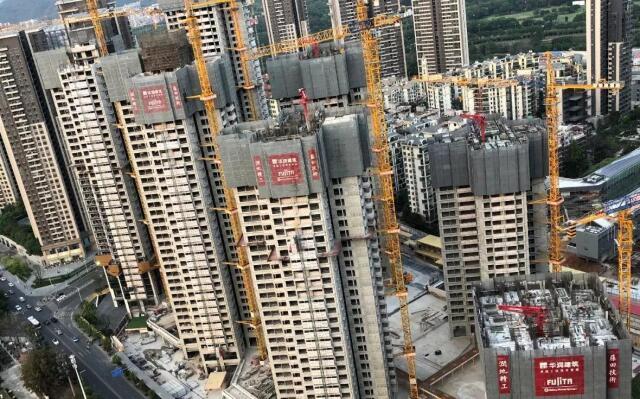
From the design stage to reduce building energy consumption, green transformation of existing buildings
In the process of architectural planning and design, taking careful and effective architectural design measures can reduce building energy consumption by 65%-75%. Reasonable arrangement of flowers and trees, waters, rockery, walls, etc. around the building can use outdoor natural resources to create a good indoor microclimate.
In fact, green buildings are not only pleasant and comfortable, but also low-carbon and environmentally friendly. In the design stage, by optimizing the building shape, building volume and building orientation, the purpose of making the building use more natural light and using the height difference for natural ventilation can be achieved. In addition to reducing building energy consumption from the design stage, green transformation of existing buildings can also be carried out. By optimizing the construction site, energy-saving equipment, improving the indoor environment and other measures, the existing old buildings do not meet the energy-saving emission reduction standards of the details of the upgrade, and then meet the national green building standards.
Related research found that the average carbon emissions of buildings after green transformation will drop by 42%. However, at present, the green transformation of existing buildings in China is mainly concentrated in the field of public buildings. In this regard, the state should establish an effective guidance and incentive mechanism to encourage residents to actively carry out green transformation of existing buildings. At the same time, it is also necessary to innovate in transformation technology. In addition to the improvement of the performance of regular heating and air conditioning, electrical lighting and other equipment, it should also make breakthroughs and innovations in renewable energy and waste heat recovery technology.
In addition, improving the carbon sequestration capacity of the ecosystem around the building has also become the focus of the next step. In addition to the landscape greening in residential areas, indoor greening, vertical greening of exterior walls, balcony greening and so on should be taken into account, and the carbon sink capacity should be improved by increasing the green area of the building itself and its surrounding areas, so as to realize the carbon neutrality of the building itself.
Green building materials
No.25, Fulian Road, Fu'an Industrial Zone, Foshan City
No. 7, Jianyi Road, Xinjiang Wujiaqu Industrial Zone, Bingtuan New Building Materials Industrial Park
12 Potsdam Avenue, Berlin, Germany
WeChat Public Number
TikTok
Copyright©2014-2025 Guangzhou Hengde building materials Co. Ltd.