

-
-
-
-
Technical Services
-
Video picture

14
2022
-
02
The wall material industry uses more than 0.135 billion tons of waste annually to save energy and 32 million tons of standard coal.
The application of tailings in the field of new wall materials mainly includes tailings-free bricks and blocks, mainly fine-grained tailings.
As an indispensable basic raw material in the development of national economy, wall materials have made great contributions to the economic and social development of our country. At present, the wall material industry has become the largest comprehensive utilization industry of solid bulk waste in China, with an annual utilization of more than 0.135 billion tons of all kinds of waste and energy saving of 32 million tons of standard coal.
Fast and effective utilization of industrial solid waste
Most of the industrial solid waste containing silicate, aluminate, carbonate, sulfate material, and the wall material is made of silicon, aluminum, carbon, sulfate material made of mineral materials. As "misplaced resources", most of them can produce new wall materials with different properties through scientific methods and ways. At this stage, due to the rapid development of technology, capital and market, industrial solid waste is rapidly and effectively used in the new wall material industry.
The application of tailings in the field of new wall materials is an important utilization mode, which is subject to the development technology and locality of wall materials. At present, the utilization rate of tailings in the wall material industry is not high.
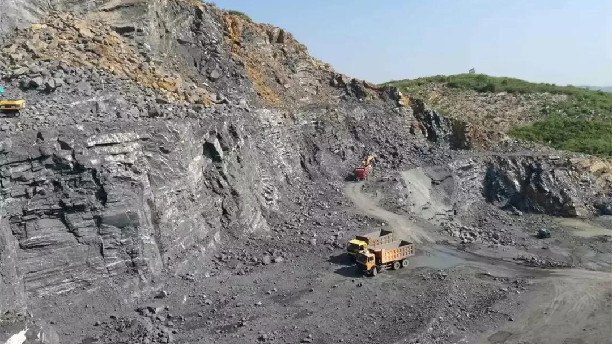
Tailings. The comprehensive utilization of tailings in China has been started since the 1980 s. The tailings solid waste produced by mine beneficiation has a huge stock, which is mostly stored in the tailings pond in the form of natural accumulation. The application of tailings in the field of new wall materials is an important utilization mode, which is subject to the development technology and locality of wall materials. At present, the utilization rate of tailings in the wall material industry is not high. If this part of solid waste can be effectively used, it can not only control environmental degradation and save arable land, but also create new industrial products that are environmentally friendly and waste-friendly, and achieve a win-win situation for society and the environment.
The application of tailings in the field of new wall materials mainly includes tailings baking-free bricks and blocks, mainly fine tailings, mixed with a small amount of aggregate, calcium cementitious materials and admixtures, mixed with water and uniformly, molded on a press, demoulded and cured to form baking-free brick products. Full tailings sintered brick is an effective use of a large number of tailings sintering raw materials, advanced sintered brick machinery and production technology, extrusion molding and roasting to produce full tailings sintered bricks; Lightweight energy-saving materials are made of tailings to make non-steam curing lightweight energy-saving materials, and their products have excellent properties such as light weight, high strength, heat preservation and heat insulation, fire prevention and sound insulation, etc. Cement clinker component is to use metal mine beneficiation tailings instead of iron mineral component in cement clinker to produce good cement clinker, effectively replacing the source of this part of iron ore, thus further as wall material component.
At present, a large number of experimental studies and engineering practices have been carried out on the comprehensive utilization of fly ash in China, and good results have been achieved.
Fly ash. Fly ash is a kind of fine fly ash trapped in the flue gas of coal combustion in thermal power plant, which is mainly composed of various oxides, including SiO, Al O, FeO, Fe O, CaO, TiO, etc. Because it has very good pozzolanic activity, after proper coordination with calcium-containing substances, under certain temperature and humidity curing conditions, hydration reactions will occur between each other, and then obtain certain strength and excellent performance of silicate products. At present, a large number of experimental studies and engineering practices have been carried out on the comprehensive utilization of fly ash in China, and good results have been achieved.
The application of fly ash in wall materials mainly includes sintered wall materials, such as fly ash hollow bricks, solid bricks and porous bricks; fly ash sintered blocks, ceramsite and microcrystalline glass, etc. Non-sintered wall materials include steam curing and autoclaved solid bricks, hollow bricks, concrete porous bricks and blocks, fly ash building boards, etc. As the coarse and fine aggregate of blocks and plates, fly ash ceramsite is also an important direction for the development of waste slag wall materials.
The physical and chemical properties of coal gangue itself limits its application in the field of wall materials to a certain extent. Generally speaking, the development direction of coal gangue products is high hole rate, high slag content, high strength and high thermal insulation performance.
Coal gangue. Coal gangue is solid waste discharged in the process of coal excavation, mining and washing, specifically including coal and rock discharged in the process of rock roadway and semi-coal roadway excavation, non-coal series white gangue piled up with coal gangue, gangue mined from roof, floor and interlayer, and hand-selected gangue and washed gangue in the process of coal washing production. Its main chemical components include SiO?, Al?O?, in addition, it also contains Fe?O?, CaO, TiO?, FeO, MgO, Na?O, K?O, SO?, P?O? and rare trace elements such as gallium, vanadium, titanium and cobalt. It is a mixture of a variety of mineral rocks. Generally, it has a low carbon content. It can be called industrial waste with "three hazards" of solid, liquid and gas. The discharge and storage over the years have occupied a large amount of land. Due to the influence of precipitation, coal gangue mountains are rich in various harmful salts that penetrate into groundwater and soil, resulting in high hardness, high sodium ions, high sulfate and high salinity, farmland salinization, and poor crop development. In addition, a large number of gangue piles are easy to weather and pollute the air. At the same time, they are also prone to spontaneous combustion and geological disasters, which cause great harm to human and social environment.
The application of coal gangue in wall materials must take into account its carbon content, mineral composition, Al?O? content and Al?O?/SiO? ratio and other parameters. The physical and chemical properties of coal gangue itself limits its application in the field of wall materials to a certain extent. Generally speaking, the development direction of coal gangue products is high hole rate, high slag content, high strength and high thermal insulation performance.
The specific application of coal gangue in the wall material industry includes coal gangue sintered wall materials, such as solid bricks, hollow bricks, porous bricks, hollow blocks, decorative bricks, splitting bricks and paving bricks, etc.; coal gangue non-sintered wall materials such as porous bricks, blocks and road bricks. It should be noted that only part of the coal gangue can meet the production of non-sintered wall materials, and the raw materials should be tested before determining whether they can be used. In addition, the coal gangue production of ceramsite as the wall material of coarse and fine aggregate, the application performance is better.
Smelting slag. China's steel production ranks in the forefront of the world, especially in the Beijing-Tianjin-Hebei region, which accounts for more than 1/3 of the country's steel production. However, in the process of smelting steel will produce a large number of blast furnace water quenching slag and steel slag, in addition to ferroalloy and non-ferrous metal smelting and refining process will also produce a large number of slag, their main components are mostly by CaO, FeO, MgO, SiO? and p? O? and Fe?O? and Al?O? It also contains a certain proportion of sulfides and a small amount of metals. Smelting slag in the wall materials industry applications mainly include the production of steel slag cement, slag cement cementitious materials, can also be used to make steel slag bricks, small hollow slag blocks and so on.
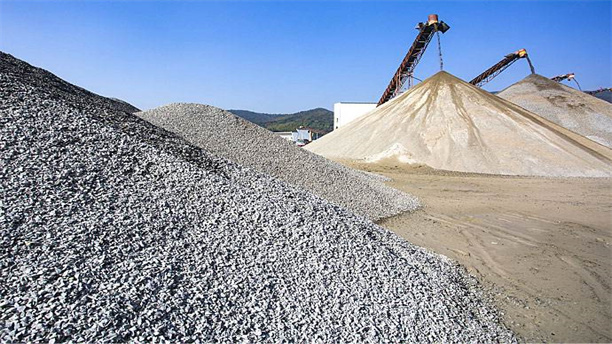
Industrial by-product gypsum can be used to produce gypsum-based wall materials after proper treatment. It is believed that in the near future, new wall materials made of industrial by-product gypsum will be more and more popular. At present, the comprehensive utilization rate of red mud in China is less than 5%, and it is a worldwide problem that a large amount of red mud can not be effectively used.
Industrial by-product gypsum. Industrial by-product gypsum refers to the by-product or waste residue with calcium sulfate as the main component generated by chemical reaction in the industrial production process, mainly including desulfurization gypsum, phosphogypsum, fluorogypsum, titanium gypsum, salt gypsum, citric acid gypsum, monosodium glutamate gypsum, copper gypsum, etc. The production of desulfurization gypsum and phosphogypsum accounts for about 85% of all industrial by-product gypsum. At present, the comprehensive utilization rate of industrial by-product gypsum in China is only about 38%, the comprehensive utilization rate of desulfurization gypsum is about 56%, and the comprehensive utilization rate of phosphogypsum is about 20%. Other by-product gypsum is about 40%. A large amount of industrial by-product gypsum stockpiled, not only occupies land, but also wastes resources. The acid and other harmful substances contained in it are easy to pollute the surrounding environment, which has become an important factor restricting the sustainable development of flue gas desulfurization and phosphate fertilizer manufacturing enterprises in China's coal-fired units. Industrial by-product gypsum can be used to produce gypsum-based wall materials after proper treatment, including gypsum board, gypsum fiber board, gypsum hollow board, gypsum chip board, gypsum block, gypsum brick, etc. In recent years, the construction industry is more and more aware of the excellent green ecological performance of gypsum products, such as light weight, high fire resistance, low energy consumption, good workability, convenient construction, can absorb and release moisture, improve the comfort of the living environment and so on. It is believed that in the near future, new wall materials made of industrial by-product gypsum will be more and more popular.
Red mud. Red mud is extremely fine particles of strong alkaline solid waste discharged from bauxite Bayer process to produce Al?O?, because FeO content is more, the appearance color is similar to the red soil, so called red mud. Bauxite is a general term for a hydrous alumina ore, such as boehmite, diaspore and gibbsite. China's bauxite reserves, boehmite accounted for 98% of the total reserves. For every 1 ton of alumina produced, the concomitant production of red mud 0.8 to 1.5 tons. At present, the comprehensive utilization rate of red mud in China is less than 5%, and it is a worldwide problem that a large amount of red mud can not be effectively used. Red mud as the main raw material can be used to produce non-steaming bricks, ceramic glazed tiles and black granular decorative tiles, etc., and can also be used to produce clear water bricks with good sound insulation, heat insulation, waterproof and other properties. Such bricks do not need external decoration when building walls. Red mud unburned brick can completely replace ordinary clay brick. In addition, red mud can make lightweight partition board, and all performance indexes of products can meet the living requirements.
In Beijing, Wuhan, Liaoning and other places, boiler slag and flue ash are used as internal fuel to make bricks, and some areas use boiler slag and flue ash to produce building blocks, which have achieved significant energy-saving effects.
Boiler slag and flue ash. Boiler slag and flue ash are solid wastes produced in the combustion process of pulverized coal boilers, and their production ranks third only to tailings and coal gangue. Its chemical composition is similar to fly ash, but its carbon content is generally higher than that of fly ash, so its calorific value is higher, up to 8000kJ/kg. With the technical transformation of the boiler, the thermal efficiency of its combustion has been improved, and the calorific value of the corresponding waste residue will be reduced. China's wall material industry almost all use this part of solid waste, most of which is used as the internal fuel for sintering bricks, smashing them to less than 3mm, mixing them with clay to make bricks, burning slowly and releasing heat in the roasting process, burning fully in the bricks, making the products become a kind of thermal insulation wall material with excellent performance. In Beijing, Wuhan, Liaoning and other places, boiler slag and flue ash are used as internal fuel to make bricks, and some areas use boiler slag and flue ash to produce building blocks, which have achieved significant energy-saving effects.
Calcium carbide slag. Carbide slag is the waste slag with calcium hydroxide (more than 90%) as the main component after calcium carbide is hydrolyzed to obtain acetylene in acetylene generator. In addition, its chemical components include Si, Al O, Fe O, CaSO, etc. It is grayish white due to trace carbon and phosphorus and sulfur impurities, with slight pungent odor, and it will also contain a small amount of calcium carbonate when piled up for a long time. Calcium carbide slag is strongly alkaline in water, and the pH value of the slag is above 12. Simple landfill will cause huge environmental pollution, and the treatment of calcium carbide slag has become a key factor restricting the rapid development of enterprises. At present, the main application of calcium carbide slag solid waste resources in the wall material industry is the production of solid bricks, hollow bricks, building blocks and other products. Generally used together with fly ash, slag, cement, etc., according to a certain formula mixed evenly, the blank preparation, pressing molding, natural curing or autoclaved curing to obtain the final product, the maximum dosage of carbide slag can reach about 30%. The prepared wall material has excellent performance, which provides an effective way for the utilization of carbide slag solid waste.
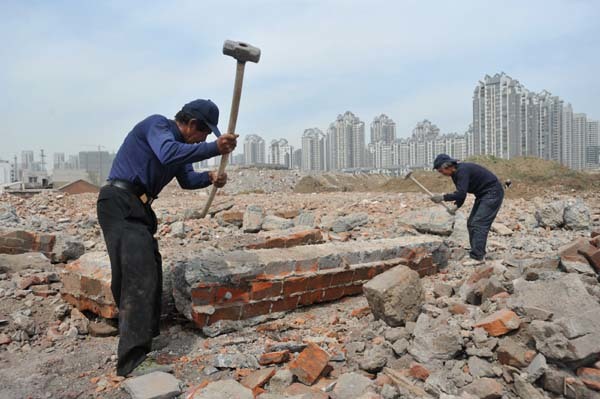
comprehensive utilization of construction waste
China is in a period of rapid development of economic construction, the waste emissions of construction sites are very large, accounting for almost 30% to 40% of the total waste generated by human production activities. According to the survey, the construction waste generated by construction in our country every year amounts to more than 100 million tons, most of which have not been treated. Some are piled up in the open air, and some are buried in low-lying places, causing environmental pollution and waste of resources. Recycling construction waste can not only solve environmental pollution, but also make rational use of these resources, and can also achieve certain economic benefits.
Construction waste such as steel bar, some metals, plastics and wood materials can be directly recycled, while waste concrete, waste masonry and other materials in construction waste are relatively difficult to reuse. The chemical composition of construction waste is a good raw material for making non-steam curing (non-burning) construction waste wall materials. Most of the performance indexes of bricks or blocks made from waste concrete, waste bricks and other construction waste are close to those of traditional clay solid bricks, the strength index is better than clay brick, which can replace clay brick as load-bearing wall material; waste concrete, waste brick and other construction waste as aggregate, the use of high sulfur petroleum coke slag, fly ash and other industrial waste to prepare recycled brick. The use of waste polystyrene foam products (EPS) particles as the aggregate of concrete, cement as the binder, and mixed with fly ash, slag, admixture to produce thermal insulation block, with low density, small thermal conductivity, sound insulation, seismic, low cost and other advantages.
Disposal of municipal sludge and mineralized waste
In 2020, China's sludge production will reach 72.883 million tons, and it is expected that China's annual sludge production will exceed 90 million tons in 2025. If a large amount of accumulated sludge is not properly treated, it will cause secondary pollution to the environment and become a major public hazard affecting urban environmental sanitation. The treatment and disposal of sludge has attracted the attention of the country and industry.
In addition, there are hundreds of sanitary and quasi-sanitary municipal solid waste landfills and general storage yards in China, which have filled or piled up tens of millions of tons of garbage. After several years of degradation, the waste in the landfill has basically reached a stable state, so it is called mineralized waste. With the development of cities, the amount of waste generated in almost every city is increasing, and the area of landfills required is increasing. It is very difficult, if not impossible, to continuously provide new landfills to meet the needs. The mineralized garbage formed by the decomposition and degradation of the garbage buried in the ground for a long time can be regarded as a kind of resource. It is a kind of stabilized soil-like substance formed by the long-term physical, chemical and biological effects of fresh domestic garbage in the landfill process. Mineralized refuse is similar to sandy soil in terms of physical structure and hydraulic conductivity, while it has the characteristics of fertile soil in terms of organic matter and microbial content. Its exploitation and utilization not only recovers resources and energy, which can alleviate today's energy crisis, but also frees up space that can be reused for landfill and prolong the service life of landfill plants.
The use of municipal sludge composite mineralized waste to prepare green wall materials is currently a rapidly developing sludge disposal and resource utilization program, is the sludge and mineralized waste as part of the raw materials for the production of building materials disposal methods, is currently mainly used in brick, ceramsite, insulation board and so on.
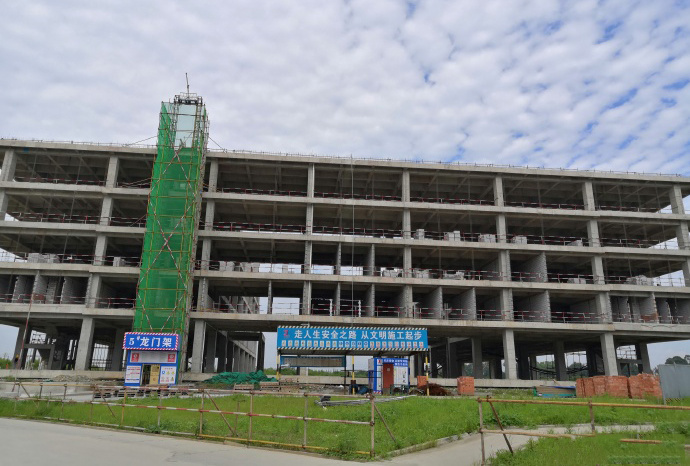
Application of agricultural waste conversion
Agricultural solid waste mainly refers to the stalks of rice or cereals, which are pressed into green wall materials by a grass brick machine. The straw brick is compared with the traditional clay brick. The straw brick has the characteristics of heat preservation, heat insulation, low cost and good air permeability, and its application range is also expanding.
Rice husk board with rice husk as the main raw material, the rice husk with crusher crushing and grinding, and adhesive in the mixer stirring evenly, by mixing hot pressing into a plate, drying made of a plate, its manufacturing process is simple, less equipment investment. Rice husk board has processing properties such as sawing, drilling, and nailing, and is widely used as wall panels, ceilings, door panels and floors. In addition, the rice husk can also be made into refractory bricks. After the rice husk is put into a ball mill for grinding, the refractory clay and organic solvent are mixed, stirred, molded and dried to make refractory bricks, which can be used to build flammable and explosive goods warehouses. Using wheat straw and straw as raw materials for the manufacture of straw artificial board and straw board, with light, durable, non-toxic and good sound insulation properties. (Author: Xi'an Wall Material Research and Design Institute: Tang Yujiao)
Tailings, waste, solid waste utilization
No.25, Fulian Road, Fu'an Industrial Zone, Foshan City
No. 7, Jianyi Road, Xinjiang Wujiaqu Industrial Zone, Bingtuan New Building Materials Industrial Park
12 Potsdam Avenue, Berlin, Germany
WeChat Public Number
TikTok
Copyright©2014-2025 Guangzhou Hengde building materials Co. Ltd.